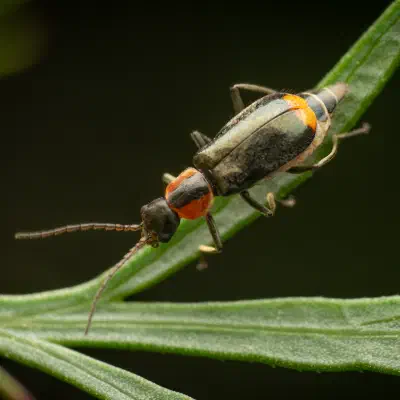
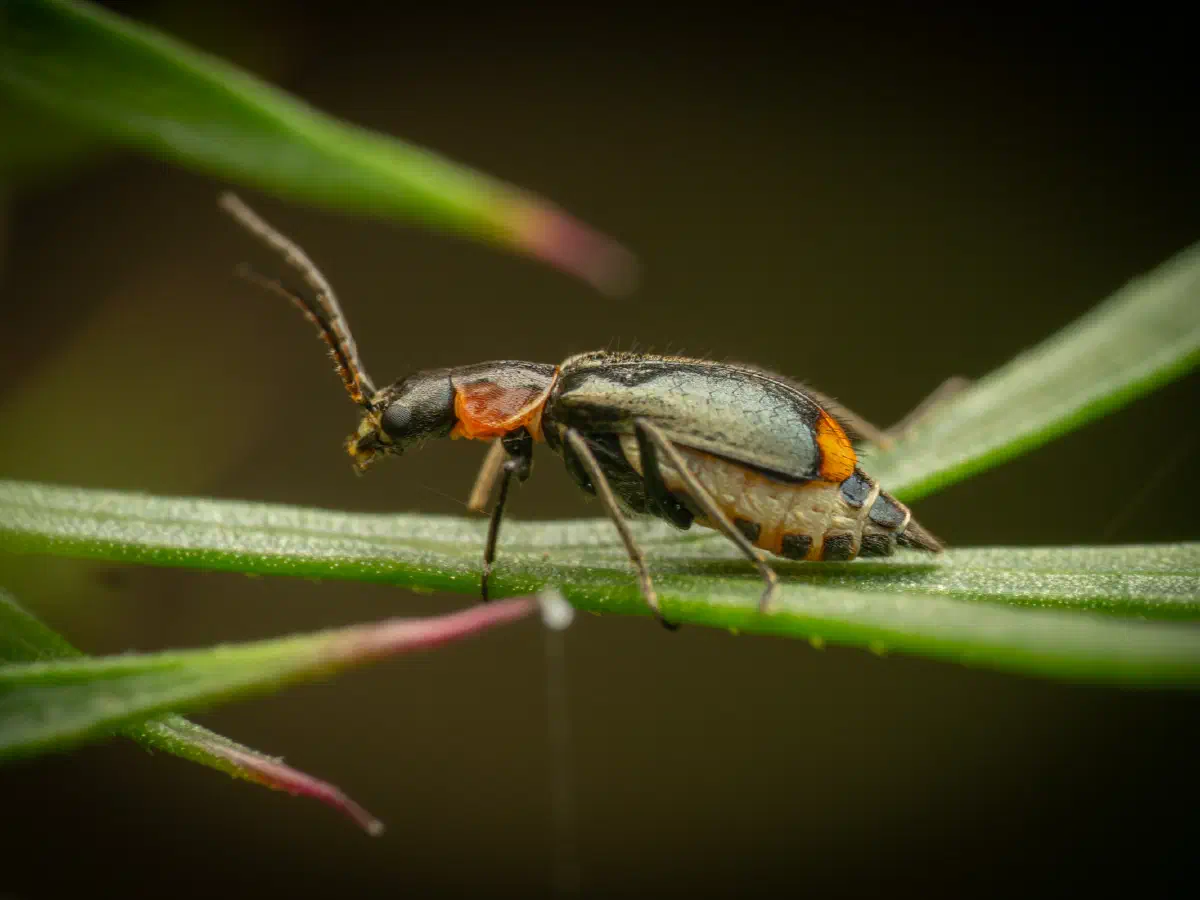
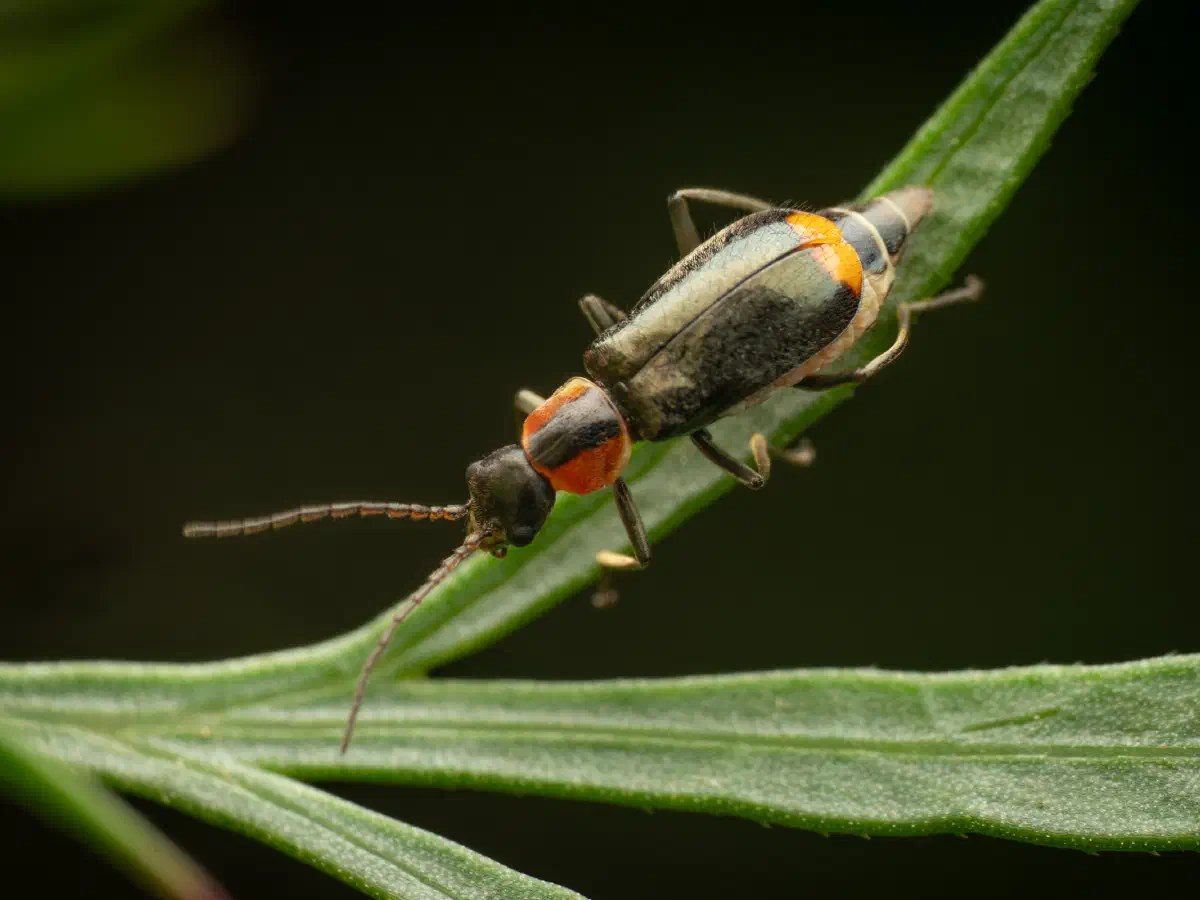
Axinotarsus pulicarius is 2.75 to 3.75mm long. It has a reddish-yellow pronotum, with a broad, black median band. Its head and eltytra are a shiny, bright grey to nearly black.
Axinotarsus pulicarius (lat. Axinotarsus pulicarius)
This is not intended to be a dry lexicon. Personal stories and sensitive articles form the framework for our pictures: „Even sustainability can be staged“
Robert the pill woodlouse in organic wonderland
Copyright
This project wouldn’t exist without Wikipedia and iNaturalist! As citizen scientists, we benefit enormously from the community’s shared knowledge. This article uses material from Wikipedia and iNaturalist. The images on this website are licensed under Attribution-NonCommercial-ShareAlike 4.0 International.

This article uses material from the Wikipedia article Axinotarsus pulicarius the free encyclopedia Wikipedia which is released under Creative Commons Attribution-ShareAlike 4.0 International License). On Wikipedia a list of authors is available.